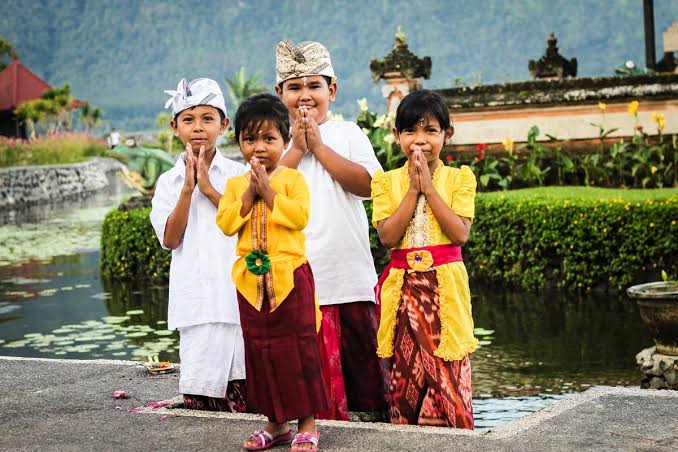
Understanding Balinese Names: Wayan, Made, Nyoman and Ketut
If you’ve spent time in Bali, you may have noticed the same names appearing again and again. Wayan, Made, Nyoman and Ketut are familiar names across the island, and there’s a reason: in many Balinese families, a name traditionally reflects a child’s birth order.
It’s a small but interesting part of daily life in Bali. Knowing a little about the custom can help visitors better understand the names they hear from local hosts, drivers, guides and neighbours.
Why are so many Balinese people called Wayan or Made?
In many Balinese families, children are given a name associated with their place in the birth order. The most familiar sequence has four positions, with different names used for each. The names may be used for people of different genders, and the sequence can begin again in families with more than four children.
Here’s a simple guide to the names visitors are most likely to encounter:
First child: Wayan, Putu or Gede
Wayan is perhaps the name visitors recognise most readily. Putu and Gede are also commonly associated with the first child. In some families and contexts, other forms may be used.
Second child: Made, Kadek or Nengah
Made is another very common name in Bali. Kadek and Nengah are also used for the second child, with preferences varying between families and communities.
Third child: Nyoman or Komang
Nyoman and Komang are commonly associated with the third child. You may hear either name used around the island.
Fourth child: Ketut
Ketut is traditionally associated with the fourth child. If there are more than four children, the sequence may repeat, though the way this is handled can differ between families.
A Balinese name can include more than birth order
These names are one part of a person’s name, not necessarily the whole name. Many Balinese people also have a personal name, and some names include titles or other elements. Naming customs are shaped by more than birth order alone, including gender and family or social traditions.
So if you meet a Wayan or a Made, you may be hearing only the name they commonly use in conversation. There is no need to guess what else their name might include.
How should visitors address people in Bali?
The simplest approach is to ask, politely, what someone would like to be called. Use the name they give you, and make a genuine effort to pronounce it correctly. Some people may be happy to explain their name; others may simply prefer to keep the conversation moving.
For guests staying in Bali, these everyday conversations can become a lovely part of the experience. A name is a natural way to begin getting to know someone, but every person has their own story behind it.